
Yes, DUI checkpoints are legal in Las Vegas and throughout Nevada, provided law enforcement strictly adheres to constitutional guidelines and state statutes. Under Nevada Revised Statute (NRS) 484B.570, police agencies such as the Las Vegas Metropolitan Police Department (LVMPD) and the Nevada State Police are permitted to set up temporary roadblocks to detect impaired drivers. However, because these checkpoints involve stopping drivers without individualized suspicion of a crime, officers must follow rigid administrative and legal rules. If police fail to follow these strict protocols, an arrest made at the checkpoint may be vulnerable to legal challenge.
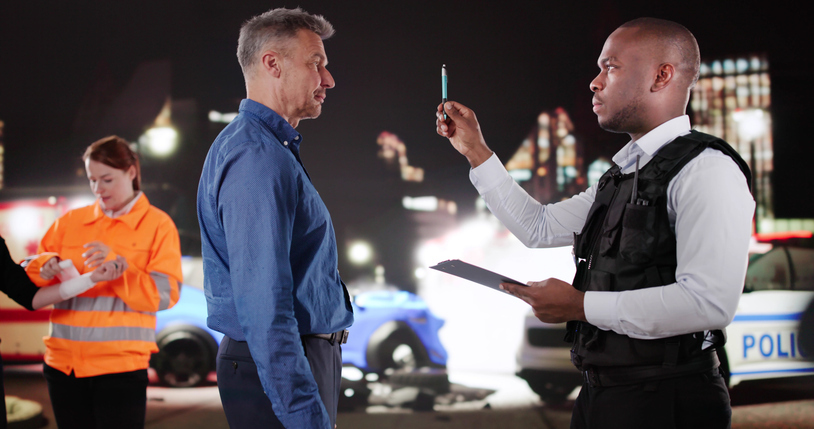
Are DUI Checkpoints Legal in Nevada?
While the Fourth Amendment of the United States Constitution protects citizens against unreasonable searches and seizures, the U.S. Supreme Court ruled that sobriety checkpoints are permissible because the public interest in preventing drunk driving outweighs the minor intrusion on motorists. Nevada courts follow this framework, allowing local law enforcement to operate DUI checkpoints as long as they follow established guidelines.
Police departments cannot simply decide on a whim to pull over random cars at an impromptu location. The decision to establish a checkpoint, as well as its location and timing, must be made by police supervisors rather than field officers. This administrative oversight ensures that the roadblock is conducted fairly and without bias.
Constitutional Requirements for Nevada Roadblocks
To remain constitutional, a Las Vegas DUI checkpoint must adhere to specific standards outlined in Nevada law and judicial precedents. The selection of vehicles stopped must follow a neutral formula, such as stopping every vehicle, every third vehicle, or every fifth vehicle. Officers in the field are not allowed to use personal discretion when deciding which cars to pull into the primary screening area.
Furthermore, the checkpoint must be clearly identifiable as an official police operation. Officers must display visible signage, flashing lights, and wear official uniforms so that approaching drivers know they are nearing a legitimate law enforcement roadblock.
Mandatory Advance Warning and Public Notice Rules
Under Nevada law, law enforcement agencies are generally required to provide advance notice to the public before conducting a temporary roadblock. You may notice police departments announcing upcoming checkpoints through local media or official social media channels before holiday weekends like New Year’s Eve, Memorial Day, or Labor Day.
Additionally, police must place visible warning signs on the road preceding the checkpoint. These signs give drivers clear notice of the upcoming stop and help prevent traffic collisions or sudden driver panic.
What to Expect at a Las Vegas Sobriety Checkpoint
When you drive into a sobriety checkpoint on the Las Vegas Strip, in Henderson, or along major thoroughfares like Spring Mountain Road, the initial interaction is usually brief. An officer will greet you, ask for your driver’s license and registration, and observe your demeanor.
During this brief exchange, officers are trained to look for visible indicators of impairment. These indicators include:
● The odor of alcohol or marijuana coming from inside the vehicle.
● Slurred speech or delayed responses to simple questions.
● Bloodshot, watery, or glassy eyes.
● Fumbling while retrieving your identification or vehicle documentation.
● Open containers of alcohol or drug paraphernalia in plain sight.
If the officer does not observe any signs of impairment, you should be allowed to proceed within a minute or two. However, if the officer suspects you may be driving under the influence, you will be directed to a secondary inspection area for further investigation.
Your Constitutional Rights at a Las Vegas DUI Checkpoint
Knowing your rights during a traffic stop can prevent you from accidentally incriminating yourself. While you must comply with lawful police orders, you retain important constitutional rights throughout the entire checkpoint encounter.
Right to Remain Silent
You are required to provide your name, driver’s license, proof of insurance, and vehicle registration upon request. Beyond providing those required documents, you have the right to remain silent under the Fifth Amendment.
You are not obligated to answer questions aimed at determining where you are coming from or going to, or questions about how much you have had to drink. You can politely inform the officer that you choose to exercise your right to remain silent.
Do You Have to Consent to Vehicle Searches?
Officers cannot search your vehicle at a DUI checkpoint unless they have a warrant, your consent, or probable cause to believe the car contains evidence of a crime. Items in plain view, such as an open beer can on the passenger seat, can establish probable cause.
If an officer asks for permission to search your car, you have the legal right to politely decline. Refusing a voluntary search request does not constitute an admission of guilt.
Field Sobriety Tests vs. Chemical Tests
If you are directed to a secondary screening area, officers will likely ask you to perform Standardized Field Sobriety Tests (SFSTs), such as the walk-and-turn or the one-leg stand. In Nevada, preliminary field sobriety tests are voluntary. You are not legally required to perform these physical tests,s and declining them does not carry an automatic license suspension.
Nevada’s Implied Consent Law, however, applies once you are lawfully arrested for a DUI. If an officer arrests you based on probable cause, you are legally required to submit to a chemical test of your breath or blood. Refusing a post-arrest chemical test leads to an immediate administrative driver’s license revocation and allows police to obtain a search warrant for a mandatory blood draw.
Can You Avoid or Turn Away from a DUI Checkpoint?
It is not illegal to avoid a DUI checkpoint if you can do so lawfully. If you see signs for an upcoming checkpoint and choose to turn down a side street or make a legal U-turn before entering the roadblock area, you have committed no crime.
However, you must obey all standard traffic laws while doing so. Making an illegal U-turn, driving over a curb, failing to signal, or speeding away will give nearby monitoring officers a valid legal reason to initiate a traffic stop. Police often position chase vehicles near the approach to checkpoints specifically to watch for traffic violations committed by drivers trying to turn around.
What Happens If You Are Arrested at a Checkpoint in Las Vegas?
If you are arrested for a DUI at a checkpoint, you will be transported to a local detention facility, such as the Clark County Detention Center or the Las Vegas City Jail. You will be booked, required to submit to a chemical test, and held until you can post bail or be released on your own recognizance.
A DUI charge in Nevada carries serious administrative and criminal penalties, including potential jail time, heavy fines, mandatory DUI school, community service, and the required installation of an Ignition Interlock Device on your vehicle.
How a Defense Attorney Challenges DUI Checkpoint Arrests
From the perspective of a former judge, DUI checkpoint cases are unique because the initial stop occurs without individualized reasonable suspicion. That means the prosecution must prove that the roadblock itself was set up and executed in strict compliance with the law.
An experienced Las Vegas criminal defense lawyer will review every detail of the checkpoint operation to identify potential constitutional violations, including:
● Lack of proper supervisory authorization for the checkpoint location and timing.
● Failure to establish or adhere to a neutral vehicle selection formula.
● Inadequate warning signs or insufficient public notice.
● Unreasonable delay or detention time in the primary screening area.
● Improperly calibrated chemical testing equipment or blood sample chain-of-custody errors.
If your attorney can demonstrate that the checkpoint failed to meet legal standards, the court may deem the initial stop unlawful. As a result, evidence gathered during the stop could be suppressed, which often leads to reduced or dismissed charges.
Frequently Asked Questions (FAQ)
Are DUI checkpoints advertised in Las Vegas before they happen?
Yes. Nevada law enforcement agencies generally issue press releases or public announcements before operating temporary roadblocks. These notices inform the public about the date and area where the checkpoint will take place.
What should I do if an officer asks me if I have been drinking?
You must provide your license, registration, and insurance, but you are not required to answer questions about alcohol consumption. You can politely state that you are exercising your right to remain silent and prefer not to answer questions without an attorney present.
Can I refuse a breathalyzer test at a Las Vegas checkpoint?
You may refuse a preliminary handheld breath test before an arrest, though the officer can still evaluate other factors to decide if probable cause exists to arrest you. Once you are formally arrested for DUI, you can refuse a mandatory breath or blood test, but doing so results in immediate administrative driver’s license suspension under Nevada’s implied consent laws.
Speak With The Vegas Lawyers About Your DUI Case
If you or a loved one were arrested at a DUI checkpoint in Las Vegas, taking early legal action is the best step you can take to protect your driving record and your freedom. The legal rules surrounding sobriety checkpoints are precise, and small technical details can make a significant difference in the outcome of your case.
At The Vegas Lawyers, our team is led by former judge Tony Abbatangelo, bringing deep courtroom insight and strategic criminal defense experience to every client we serve. We understand how prosecutors build DUI cases and how to identify weaknesses in checkpoint procedures.
We are here to evaluate your situation in a calm, straightforward manner and discuss your legal options without any pressure. Call us today at 702-707-7000 to speak with our team about your case.