
Losing your Second Amendment rights after a criminal conviction can feel like a permanent punishment. Under both federal and Nevada state law, certain convictions completely strip you of the right to own, possess, or control a firearm. However, for many individuals who have served their time and demonstrated clear rehabilitation, this loss does not have to be a lifelong sentence.
In Nevada, restoring your gun rights is possible, but it requires navigating a very specific and often challenging legal process. It is important to understand right from the start that sealing your criminal record will not restore your gun rights. The only legal path to regaining your right to bear arms in Nevada is through a formal pardon from the Nevada Board of Pardons Commissioners.
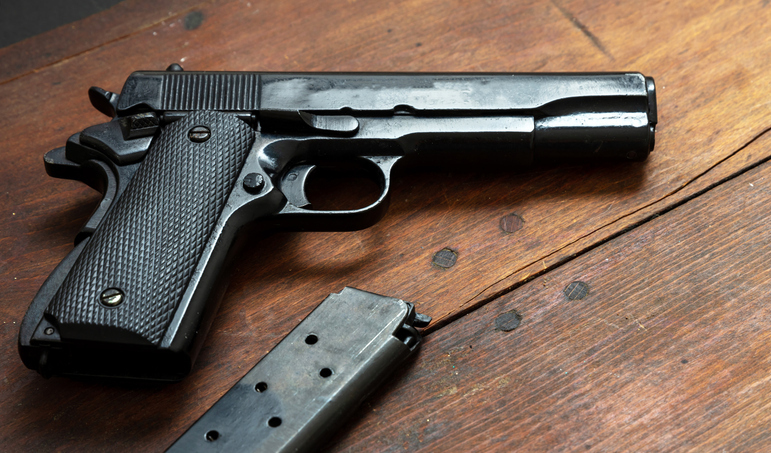
Why You Lose Your Gun Rights in Nevada
Nevada takes firearm restrictions seriously. Under Nevada Revised Statutes (NRS) 202.360, it is a Category B felony to possess or control a firearm if you fall into specific prohibited categories. This law applies regardless of how much time has passed since your conviction.
The two most common reasons individuals lose their gun rights in Nevada are:
Felony Convictions
Any felony conviction in Nevada, another state, or at the federal level immediately revokes your right to possess a firearm. This applies to all categories of felonies, from high-level violent crimes to lower-level, non-violent offenses like certain drug possession or property crimes.
Domestic Violence Convictions
You do not need to be convicted of a felony to lose your gun rights. A misdemeanor conviction for domestic violence also triggers a lifetime ban on firearm possession under both Nevada law and federal law (the Lautenberg Amendment).
The Consequence of Unlawful Firearm Possession
From the perspective of a former judge, the courts have zero tolerance for prohibited persons found in possession of a firearm. If you are caught with a gun after a felony or domestic violence conviction, the penalties are severe.
Violating NRS 202.360 is a Category B felony in Nevada. If convicted, you face a mandatory minimum of one year and a maximum of up to six years in a Nevada state prison, along with potential fines up to $5,000. Federal prosecution is also a distinct possibility, which can result in even harsher federal prison sentences.
The Misconception About Record Sealing
One of the most common legal misunderstandings is that sealing a criminal record restores a person’s gun rights. This is entirely false.
Record sealing is an excellent legal tool that hides your past mistakes from public view, making it easier to secure employment and housing. However, sealing your record does absolutely nothing to restore your right to bear arms. A background check run for the purchase of a firearm will still uncover a sealed conviction.
The Only Solution: The Nevada Board of Pardons Commissioners
To restore your gun rights, you must obtain a pardon from the Nevada Board of Pardons Commissioners. This board consists of the Governor of Nevada, the Justices of the Nevada Supreme Court, and the Nevada Attorney General.
A pardon is an official act of forgiveness. It does not erase your criminal record, but it restores specific civil rights.
The Right to Bear Arms Must Be Specific
It is crucial to understand that a standard pardon does not automatically restore your gun rights. When the Board issues a pardon, it must explicitly state that your right to bear arms is restored. If the pardon document is silent on firearms, or if it explicitly restricts them, you remain a prohibited person under the law.
The Pardon Application Process: What to Expect
Securing a pardon is intentionally difficult. The Board of Pardons Commissioners receives hundreds of applications and only grants hearings to a very small percentage of applicants. Having a strategic, well-prepared application is your only chance of success.
Step 1: Evaluating Eligibility
You cannot apply for a pardon immediately after finishing your sentence. The Board generally requires a significant period of time to pass, often 5 to 10 years or more, depending on the severity of the offense, following your complete discharge from prison, parole, or probation. During this time, you must maintain a perfectly clean record.
Step 2: Building the Application
Your application must convince the Board that you are fully rehabilitated and no longer pose a threat to the community. This requires more than simply filling out a form. A compelling application includes:
● Proof of stable employment and housing
● Evidence of community involvement or charitable work
● Strong character reference letters from employers, community leaders, or law enforcement
● A sincere, well-articulated statement taking responsibility for your past actions and demonstrating your personal growth.
Step 3: The Board Hearing
If your application passes the initial review, you will be scheduled for a hearing before the Board. This is a formal proceeding where the Governor, Justices, and Attorney General will question you directly. Having legal representation during this hearing is invaluable. An experienced attorney can help prepare you for the intense questioning and will advocate aggressively on your behalf.
How a Defense Attorney Can Help Restore Your Rights
Applying for a pardon without legal representation is risky. If the Board denies your application after a hearing, you usually cannot apply again. You have one real shot to get this right.
An attorney with deep courtroom experience understands exactly what the Board is looking for. They know how to highlight the mitigating factors of your original conviction, showcase your rehabilitation, and craft a narrative that resonates with the decision-makers. They will also ensure that your application explicitly requests the restoration of your firearm rights, preventing a hollow victory where you receive a pardon but still cannot legally own a gun.
Frequently Asked Questions (FAQ)
Can an out-of-state conviction be pardoned in Nevada?
No. The Nevada Board of Pardons Commissioners only has the authority to pardon convictions that occurred in Nevada state courts. If your felony occurred in California or federal court, you must seek a pardon from the Governor of California or the President of the United States, respectively.
How long does the pardon process take?
The process is notoriously slow. From the moment you submit your application to the day of your hearing, it can take anywhere from two to four years, depending on the Board’s current backlog.
Does a pardon erase my criminal record?
No. A pardon acts as forgiveness and restores your civil rights, but the conviction remains on your record. However, once you receive a pardon, you are generally in a much stronger position to petition the court to have that record sealed.
Speak With The Vegas Lawyers About Restoring Your Rights
Regaining your Second Amendment rights requires patience, preparation, and a deep understanding of the Nevada legal system. A single mistake on your application can cost you your only chance at a pardon.
Led by a former judge, our team at The Vegas Lawyers knows how to navigate this complex process. We understand what the Board of Pardons Commissioners expects, and how to present your case in the most compelling light possible.
If you have stayed out of trouble and are ready to reclaim your rights, we are here to guide you through the process. Reach out to our team today at 702-707-7000 to discuss your eligibility in a calm, pressure-free environment.