
Being pulled over by the police in Las Vegas can be a highly stressful experience. Whether you are driving down the Strip or heading home through a residential neighborhood, seeing red and blue lights in your rearview mirror immediately puts you on edge. Most drivers know that the police need a valid reason to pull them over and an even stronger reason to make an arrest. However, the legal terms used to describe these reasons are often misunderstood.
Two of the most important concepts in criminal defense are reasonable suspicion and probable cause. These are not just legal buzzwords; they are fundamental constitutional standards that dictate what law enforcement officers can and cannot do during a traffic stop. Understanding the difference between the two is crucial for protecting your rights.
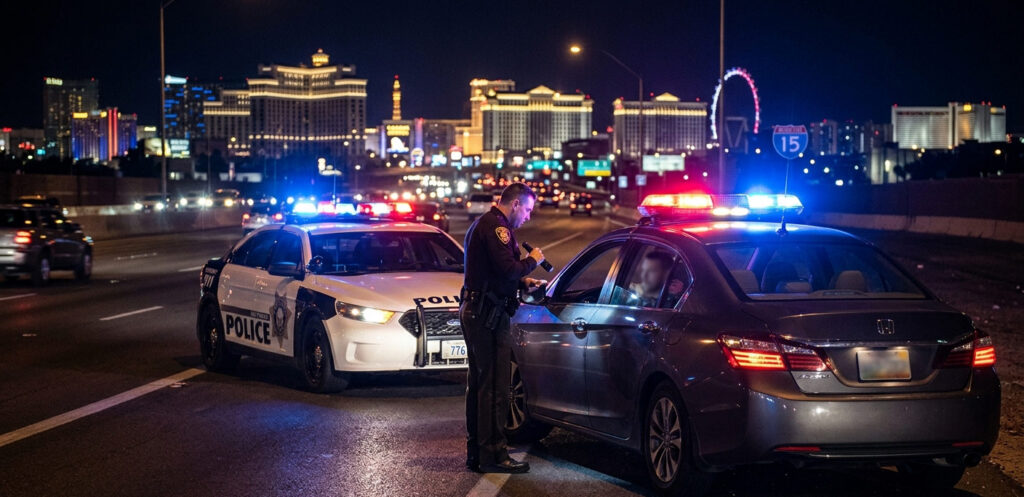
The Core Difference in Nevada Criminal Law
The Fourth Amendment of the United States Constitution protects citizens from unreasonable searches and seizures. In the context of a Nevada traffic stop, a seizure occurs the moment a police officer pulls your vehicle over. A search occurs if the officer looks through your vehicle or your personal belongings.
To legally justify these actions, officers must meet specific burdens of proof. Reasonable suspicion is the lower legal standard. It is the minimum justification required for an officer to initiate a brief traffic stop or temporarily detain you. Probable cause is the higher legal standard. An officer must have probable cause to arrest you, get a warrant, or search your vehicle without your consent.
From the perspective of a former judge, these standards represent strict boundaries. Las Vegas courts evaluate police conduct based on whether the officer had the appropriate level of justification at each specific stage of the encounter. If an officer crosses the line without the right legal justification, any evidence they gather may be thrown out of court.
What Is Reasonable Suspicion in a Nevada Traffic Stop?
Reasonable suspicion means an officer has specific and articulable facts that indicate criminal activity is happening, has happened, or is about to happen. It also applies to simple civil traffic violations.
This standard requires more than just a gut feeling or a vague hunch. The officer must be able to explain exactly what they saw that made them suspect a violation. However, the threshold is relatively low. An officer does not need concrete proof that you committed a crime to pull you over. They only need a valid reason to investigate further.
Common Examples of Reasonable Suspicion
Las Vegas Metropolitan Police and Nevada State Police frequently rely on observable driving behaviors to establish reasonable suspicion. Some common examples include:
- Speeding or driving too slowly
- Swerving between lanes or hugging the center line
- Running a red light or stop sign
- Driving at night without headlights
- Having an expired vehicle registration or a broken taillight
If an officer observes any of these behaviors, they have the legal right to initiate a traffic stop to investigate the issue.
What Is Probable Cause for an Arrest or Search?
Probable cause is a much stricter standard than reasonable suspicion. It exists when the facts and circumstances known to the officer would lead a reasonable person to believe that a crime has been committed and that the specific person being investigated committed it.
When it comes to the search of a vehicle, probable cause means that the officer has a reasonable belief, based on specific and articulable facts, that evidence of a crime or contraband is located inside the vehicle. Judges look at the totality of the circumstances when determining if probable cause existed. They review police reports and body camera footage to see if the officer’s belief was objectively reasonable based on the evidence available at the time.
Common Examples of Probable Cause
An officer cannot arrest you or search your car just because you were speeding. While speeding may provide the legal basis for the initial stop, they must discover new facts during the stop that elevate their suspicion to probable cause to legally conduct a search or facilitate an arrest. Examples include:
- The strong odor of alcohol or marijuana is coming from the vehicle.
- Visible contraband, such as illegal drugs or weapons, is resting in plain view on the passenger seat.
- A driver failing standardized field sobriety tests.
- Slurred speech and bloodshot eyes combined with an admission of drinking.
- A driver openly confessing to possessing illegal items.
How Traffic Stops Escalate from Suspicion to Probable Cause
Many severe criminal charges in Las Vegas begin as simple traffic stops. Officers are heavily trained to use a routine stop, often referred to as a “pretextual stop,” as an opportunity to look for signs of larger crimes.
The escalation process usually happens in stages. First, the officer observes a minor traffic violation, like an illegal U-turn. This provides the reasonable suspicion needed to pull the car over. When the officer approaches the window to ask for the driver’s license and registration, they begin observing the driver and the interior of the car.
If the officer smells alcohol, the initial reasonable suspicion for a traffic violation expands into reasonable suspicion for a DUI investigation. The officer will then ask the driver to step out of the vehicle to perform field sobriety tests. If the driver performs poorly on those tests, the officer now has probable cause to make a DUI arrest.
What Happens If the Police Violate Your Constitutional Rights?
Police officers sometimes make mistakes, act on mere hunches, or overstep their legal authority. If an officer pulls you over without reasonable suspicion or searches your vehicle without probable cause, they have violated your Fourth Amendment rights.
Having deep courtroom experience means understanding exactly how judges scrutinize these violations. When a defense strategy is built around police misconduct, the focus shifts to the legality of the stop itself rather than whether the defendant actually possessed illegal items.
Challenging the Evidence in Las Vegas Courts
When police violate your rights, a defense attorney can file a motion to suppress evidence. This legal maneuver relies on the exclusionary rule, which states that any evidence obtained through an illegal search or seizure cannot be used against you in court.
If a Las Vegas judge determines that the officer lacked reasonable suspicion to stop your car, everything discovered after the stop is usually considered fruit of the poisonous tree. The judge will grant the motion to suppress the evidence. Without that crucial evidence, prosecutors are often forced to dismiss the charges entirely or offer a highly favorable plea reduction.
Frequently Asked Questions
Can the police search my car with only reasonable suspicion?
No. Reasonable suspicion only allows an officer to briefly detain you and investigate. To legally search your vehicle without a warrant, they must have probable cause or your explicit consent. You always have the right to politely refuse a vehicle search.
Do I have to answer police questions during a traffic stop?
Under Nevada law, you are required to provide your driver’s license, vehicle registration, and proof of insurance when pulled over. However, you do not have to answer probing questions about where you have been, where you are going, or whether you have consumed alcohol. You can politely invoke your right to remain silent.
How long can police detain me during a traffic stop?
A traffic stop must be temporary and last no longer than is necessary to address the reason for the stop, and in no event longer than 60 minutes under Nevada law. For example, an officer cannot hold you on the side of the road for an hour waiting for a K-9 unit to arrive unless they have developed independent, reasonable suspicion that a drug crime has occurred or is occurring during the initial stop.
Protecting Your Rights After a Las Vegas Traffic Stop
Navigating the criminal justice system requires an understanding of how the law is actually applied inside the courtroom. The line between a lawful investigation and an illegal search is incredibly thin. Having an advocate who knows exactly what judges look for can make a significant difference in the outcome of your case.
If you are facing charges stemming from a traffic stop, early intervention is the best way to protect your future. A thorough review of police reports, dispatch records, and body camera footage is essential to uncover potential rights violations.
The Vegas Lawyers, led by former judge Tony Abbatangelo, bring a strategic and informed approach to criminal defense. We understand how the courts evaluate reasonable suspicion and probable cause, and we use that insight to build strong defenses for our clients. If you have questions about your situation or want to know if your rights were violated, we are here to help. Give us a call at 702-707-7000 to discuss your case and explore your legal options.