
Being served with a Temporary Protective Order in Nevada can be an incredibly stressful and confusing experience. Alternatively, if you are the person seeking protection, the thought of facing your abuser or harasser in a courtroom is equally daunting. Because these orders deal directly with personal safety and individual liberty, Las Vegas courts take them very seriously.
Whether you are the applicant seeking protection or the adverse party defending against false allegations, knowing what happens at a Las Vegas TPO hearing is critical. Walking into a courtroom blind is never a good strategy. Having a clear understanding of the legal process, the evidentiary standards, and the potential outcomes can help you navigate such a high-stakes situation with confidence.
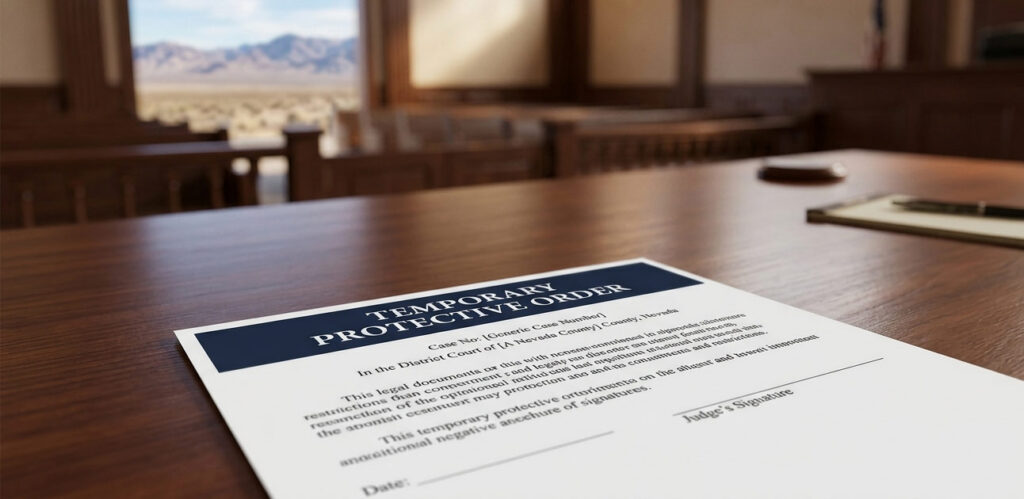
Understanding Temporary Protective Orders in Nevada
A Temporary Protective Order is a civil court order designed to protect individuals from violence, harassment, or stalking. In Clark County, the specific court in which you will appear depends on the nature of your relationship with the other party.
If the situation involves domestic violence between family members, spouses, or people who share a child, the case is handled in the Clark County Family Court. If the situation involves stalking or harassment between strangers, coworkers, or mere acquaintances, the case is typically filed in a local Justice Court.
When a person first applies for a TPO, the judge reviews the application in private. This is known as an “ex parte” review. If the judge believes there is an immediate threat of harm based solely on the applicant’s written statement, they will grant an initial emergency order. This initial order usually lasts between 15 and 45 days. The person accused of the behavior must be formally served with the paperwork by law enforcement after the initial emergency order is issued.
The Initial TPO versus The Extension Hearing
The initial 15 to 45-day order is just the first step in the process. The actual TPO hearing occurs so that the court can decide the long-term future of the protective order.
Usually, the applicant will request that the court convert the temporary order into an Extended Protection Order. An extended order in Nevada can last for up to one or two years, depending on the specific circumstances. Alternatively, the adverse party can request a hearing immediately after being served to ask the judge to dissolve or modify the temporary order before it expires.
Meeting the Burden of Proof
During the hearing, the burden of proof shifts. The applicant must provide evidence demonstrating that a continuing threat exists and that an extended order is truly necessary. At the same time, the adverse party is given the formal opportunity to defend themselves, present their own evidence, and request that the protective order be dismissed.
From the perspective of a former judge, credibility is the most important factor in these hearings. Because both sides often have wildly different versions of the same event, the court relies heavily on verifiable evidence and consistent testimony to make a ruling.
What to Expect Inside a Clark County Courtroom
A TPO hearing is very different from a full-blown criminal trial. The proceedings are generally short, often lasting less than an hour. The case will be heard by either a Judge or a designated Hearing Master.
Because time is limited, the court expects both parties to be concise and prepared. The judge will have already read the initial application and any attached affidavits. The purpose of the hearing is not to rehash every single detail of your relationship. Instead, the focus is strictly on the incidents that prompted the request for protection and whether a future threat exists.
Presenting Evidence to the Judge or Hearing Master
Both the applicant and the adverse party will be in the same courtroom at the same time. This dynamic can cause emotions to run high, which makes staying calm and collected absolutely vital.
Judges rarely call outside witnesses to provide sworn testimony during these brief hearings. Instead, the court relies on documentary evidence. Effective evidence in a Las Vegas TPO hearing often includes printed text messages, emails, voicemail recordings, medical records, and official police reports. Both sides are tasked with presenting their evidence cleanly and efficiently. Getting flustered or arguing directly with the other party in front of the judge will severely damage your credibility.
Potential Outcomes of a TPO Hearing
At the conclusion of the hearing, the judge or hearing master will make an immediate decision. They generally have three main options. They can dissolve the order completely, keep it in place until its original expiration date, or grant an Extended Protection Order.
If an extended order is granted, the consequences for the adverse party are severe. Beyond being legally forced to stay away from the applicant, the adverse party may lose their right to purchase or possess firearms. The extended order will also appear on background checks, which can jeopardize security clearances, military careers, and professional licensing. Furthermore, violating any of the terms of an active protective order is a separate criminal offense that will lead to an immediate arrest and potential jail time.
Frequently Asked Questions
Do I need a lawyer for a TPO hearing in Las Vegas?
You are not legally required to have an attorney to apply for or defend against a TPO. However, legal representation is highly recommended. The rules of evidence still apply in these hearings. An attorney can help you organize your documents, present your arguments clearly, and keep raw emotions from ruining your case.
What happens if the adverse party does not show up?
If the adverse party was properly served with the notice of hearing and fails to appear in court, the judge will typically rule in favor of the applicant. The judge will review the applicant’s evidence and, in most cases, grant the request for an Extended Protection Order by default.
Can a TPO affect my custody rights relating to my minor child?
Yes, a TPO can drastically alter a child custody arrangement. Family court judges routinely use protective orders to establish temporary custody and visitation schedules. If an extended order is granted against a parent that includes a formal finding that domestic violence has occurred, it can create a legal presumption that the parent is unfit for joint physical custody, making it very difficult to regain equal parenting time in the future.
Protecting Your Future and Legal Rights
Whether you are seeking safety from a dangerous situation or fighting back against a false allegation designed to gain an advantage in a divorce, the stakes at a TPO hearing are incredibly high. The decisions made in that brief courtroom appearance will impact your life, your record, and your family for years to come.
Having legal representation that understands the nuances of the Clark County court system provides a significant advantage. A defense strategy built on real courtroom experience ensures that your voice is heard, your evidence is respected, and your rights are protected.
If you are facing an upcoming TPO hearing, do not wait until the last minute to get help. Preparation is the key to a successful outcome. The Vegas Lawyers are here to review your case and guide you through the process. Reach out to our team at 702-707-7000 to discuss your situation and explore your legal options.