
Being arrested can be a frightening and confusing experience that often leaves you overwhelmed and unsure of what to do next. Like many people, you might be tempted to start talking to the police officers because you believe that cooperating will help clear up a misunderstanding and prevent your arrest. The reality, however, is that once law enforcement officers suspect you of a crime, their primary objective is gathering evidence, and anything you say to officers with the Las Vegas Metropolitan Police Department (LVMPD), the Nevada Highway Patrol (NHP), or other law enforcement agencies may ultimately be used by Clark County prosecutors to build a criminal case against you. If you have already spoken to the police during an arrest, do not panic. Contact the experienced defense team at The Vegas Lawyers for a confidential case review to see if your rights were violated.
What Are Your Miranda Rights Under Nevada Law?
In Miranda v. Arizona, the U.S. Supreme Court held that your 5th Amendment right against self-incrimination requires law enforcement officers to inform a suspect of the following rights during an arrest or custodial interrogation:
- The suspect has the right to remain silent.
- That anything a suspect says can be used against him or her in a court of law.
- That a suspect has the right to an attorney.
- If the suspect cannot afford an attorney, one may be appointed for them.
Although these rights stem from protection provided under the U.S. Constitution, they apply throughout Nevada and govern how law enforcement officers may conduct custodial interrogations.
The Right to Remain Silent (And How to Actually Use It)
Although you have a constitutionally protected right to remain silent during a custodial interrogation, you must properly assert that right to benefit from the protection offered. In practical terms, this means that you need to state your intentions clearly and unequivocally by respectfully telling the officer attempting to question you that you are exercising your right to remain silent. Refrain from ambiguous statements, such as “Maybe I should not talk” or “I am not sure if I should answer,” as they do not definitively invoke your 5th Amendment rights. Moreover, once you have asserted your rights, do not continue to engage in casual conversation with officers or answer any questions because doing so can undermine your constitutional rights.
The Right to Legal Counsel in Las Vegas
Your right to an attorney is one of the most powerful protections you have during a criminal investigation. Law enforcement officers receive extensive training in interrogation techniques and gain considerable experience questioning suspects on the job. As the suspect in a criminal investigation, having experienced legal counsel present during questioning is crucial to level the playing field and protect your constitutional rights.
You are entitled to have an attorney present any time the police wish to talk to you, but your constitutional right to have an attorney appointed to represent you if you cannot afford one only kicks in during a custodial interrogation.
During a custodial interrogation, the moment you request an attorney, the questioning must stop and cannot resume until your attorney is present. If the police continue to ask you questions after you ask for an attorney, in violation of your constitutional rights, anything you say may be inadmissible at trial.
When Are Las Vegas Police Actually Required to Read Your Rights?
One of the most common misconceptions about Miranda warnings is that officers must read them to you immediately upon arrest. Legally, a law enforcement officer is only required to inform you of your Miranda rights during a custodial interrogation.
You are considered to be in “custody” if a reasonable person in your situation would not feel free to leave. Clearly, if you have been handcuffed and placed in the back of a police car, you are in custody, but there are less obvious circumstances that would also qualify as “in custody.”
An “interrogation” refers to questions and/or conduct by a law enforcement officer that is designed or intended to elicit an incriminating response. Asking you for your name is probably not designed to elicit an incriminating response, but asking you where you were on a specific date and time would likely qualify as interrogation.
Both elements (custody and interrogation) must be met for Miranda warnings to be required. This means that a police officer may be able to ask you questions before arresting you without providing you with your Miranda warnings. Likewise, if you are arrested but not questioned, Miranda warnings are not required.
The Biggest Myth: “They Didn’t Read My Rights, So My Case Is Dismissed”
Contrary to the myth perpetuated by TV shows and movies, failing to read a suspect their Miranda rights during an arrest does not result in the case automatically being dismissed. In some cases, the Miranda warnings were not required. For example, if the police never questioned the suspect, then no warnings were necessary.
Even if Miranda warnings were required, failing to provide them may not be fatal to the State’s case if sufficient independent evidence exists. A Miranda violation only potentially excludes incriminating statements you made to the police. If the investigation uncovered physical evidence, surveillance footage, eyewitness testimony, or forensic evidence that can be used against you, the prosecution may continue despite the Miranda issue.
What Actually Happens: The Motion to Suppress Evidence
If your Miranda rights were violated, your criminal defense attorney may file a Motion to Suppress Evidence asking the court to exclude improperly obtained statements from being admitted as evidence at trial. This important legal tool effectively argues that because a statement was obtained by violating your constitutional rights, the prosecution should not be allowed to use it to prove your guilt. If successful, a Motion to Suppress Evidence can result in preventing crucial evidence from being used against you. Without that evidence, the prosecution may face substantial obstacles in proving guilt beyond a reasonable doubt.
Bodycam footage and police reports are critical to proving a Miranda violation. The sooner you hire us, the sooner we can lock down the evidence. Call The Vegas Lawyers today.
Exceptions: When Miranda Rights Do NOT Apply in Nevada
Although Miranda warnings offer strong protection during many interactions with police, there are exceptions when Miranda warnings are not required.
DUI Stops and Roadside Questioning
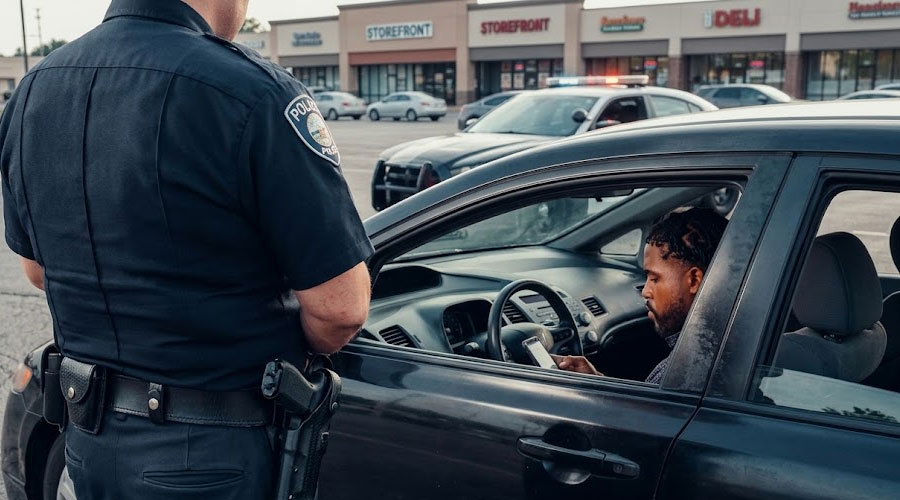
One of the most common exceptions to the Miranda warning requirement involves DUI investigations. During a routine traffic stop, officers frequently ask questions such as “Have you been drinking tonight?” or “Where are you coming from?” Because these encounters are generally considered temporary investigative detention rather than formal custody, Miranda warnings are usually not required.
“Spontaneous Statements” in the Back of the Cop Car
Another important exception involves voluntary statements that do not trigger the Miranda warning requirement. Miranda protects against custodial interrogation. It does not protect against voluntary statements you make without first being asked a question. For example, if you are in the back of a police car, and you say “I didn’t mean to hit him” without being asked a question, the statement would likely be admissible at trial.
What to Do If You Are Arrested in Clark County
If you are arrested, your actions immediately following your arrest can significantly affect the outcome of your case. Try to remain calm and take the following steps:
- Invoke Your Rights. Clearly and succinctly state that you are exercising your right to remain silent and request an attorney.
- Keep Quiet. After invoking your rights, do not discuss your case with anyone, including the police, jail personnel, or other inmates.
- Contact a Criminal Defense Attorney Immediately. Having an experienced criminal defense attorney on your side as early as possible provides the best opportunity to identify constitutional violations and develop a successful defense strategy.
How The Vegas Lawyers Defend Your Constitutional Rights
At The Vegas Lawyers, we understand how intimidating police interrogations can be. Moreover, we know that constitutional rights violations do occur, which is why we carefully review body camera and dash camera footage, interrogation videos, and arrest reports to determine whether LVMPD officers, Nevada State Police, or other agencies complied with constitutional requirements and whether any statements should be excluded from evidence. When law enforcement officers violate your rights, we aggressively challenge those violations and seek every available legal remedy that can weaken the prosecution’s case and protect your future.
FAQs
Can my case be thrown out if Las Vegas police didn’t read me my Miranda rights?
Failing to read you your Miranda rights does not automatically lead to your case being thrown out.
Do police have to read me my rights during a DUI traffic stop in Nevada?
Usually, a DUI traffic stop does not trigger a Miranda warning requirement.
What exactly do I say to the cops to invoke my right to remain silent?
Clearly tell the officer, “I am invoking my right to remain silent”, and then stop answering questions.
Can I ask for a lawyer if I’m just being detained on the Las Vegas Strip but not arrested?
You always have the right to have a lawyer with you when speaking to the police.
Are Nevada police allowed to lie to me during an interrogation?
Yes. The police are legally allowed to lie to a suspect during an interrogation.
What would happen if I started talking to detectives but then decided I want a lawyer?
The moment you ask for a lawyer, questioning must stop until the lawyer is present.
Will the judge know if I refuse to talk to the police?
No. Exercising your constitutional right to remain silent cannot be used as evidence of guilt.
Your constitutional rights matter. If you or a loved one is facing charges in Clark County, contact The Vegas Lawyers for a free, 100% confidential consultation. We are available 24/7.